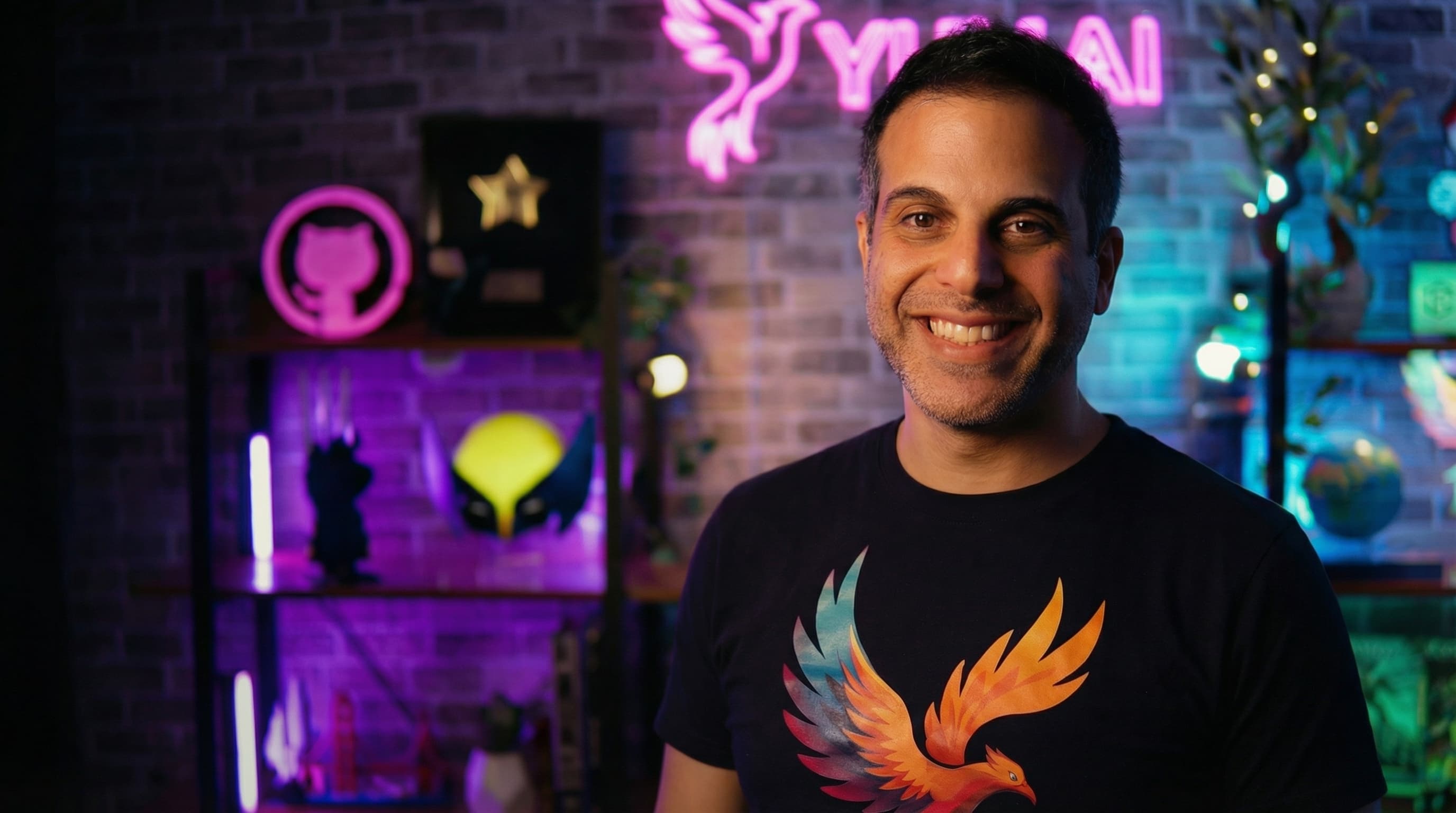
The Uncanny Valley Is Behind Us
I generated the cover image for this blog post with Midjourney. Can you tell? Probably not. And that's exactly the point.
Midjourney v7 represents a genuine inflection point in AI image generation - the moment when distinguishing AI-generated images from photographs became genuinely difficult, even for trained eyes. This isn't incremental progress. This is the crossing of a threshold we've been approaching for years.
This matters to all of us as developers, designers, and builders because visual content is central to everything we create. Websites need hero images. Products need marketing assets. Presentations need illustrations. Until now, you either paid for stock photography, hired photographers, or accepted obviously synthetic AI images. Midjourney v7 eliminates that compromise. The implications for content creation, marketing, prototyping, and visual communication are profound.
The Problem With Previous Versions
Here's the state we were in before v7: AI image generators were impressive novelties but unreliable production tools. Midjourney v5 and v6 could produce stunning images - occasionally. But they suffered from persistent problems that made professional use frustrating:
The "AI Look": There was something subtly wrong about AI images. Skin had a waxy quality. Lighting was simultaneously too perfect and somehow wrong. Backgrounds featured architectural impossibilities. Small details - fingers, text, fabric weaves - betrayed the synthetic origin.
Character Inconsistency: You could generate an amazing character portrait, but generating that same character again - in a different pose, different lighting, different scene - was essentially gambling. The same prompt would produce entirely different people. Building a visual story or consistent brand identity was nearly impossible.
Prompt Lottery: Getting a specific result required extensive prompt iteration. "A professional headshot of a 35-year-old woman with brown hair" might give you 20 wildly different interpretations before producing something usable. Professional workflows demand predictability, not slot machine randomness.
Limited Control: You could describe what you wanted, but you couldn't precisely control camera angles, lighting direction, depth of field, or compositional elements. The model interpreted your prompt through its own aesthetic lens, which often conflicted with specific creative visions.
We tried alternatives. DALL-E 3 improved prompt understanding but lacked artistic range. Stable Diffusion offered control through complex workflows (ControlNet, LoRA, inpainting) but required technical expertise and setup time. Adobe Firefly played it safe with generic, corporate-friendly outputs. Each had trade-offs that prevented truly professional adoption.
How Midjourney v7 Actually Works
The v7 architecture represents Midjourney's most significant technical leap. While the company keeps implementation details proprietary, the observable improvements reveal several breakthrough capabilities:
Photorealistic Rendering Engine
The rendering quality in v7 operates at a different level. The model now understands:
Physical Light Transport: How light bounces through skin (subsurface scattering), refracts through glass, creates soft shadows from overcast skies versus harsh shadows from direct sun. Previous versions approximated these effects; v7 simulates them with physical accuracy.
Material Properties: The difference between matte cotton and silk, between brushed aluminum and polished chrome, between old leather and new leather. v7 generates textures that photograph correctly under any lighting condition.
Camera Physics: Depth of field that matches real lens characteristics. Motion blur that follows actual shutter speed physics. Chromatic aberration and vignetting that match vintage versus modern lenses.
Environmental Coherence: Reflections that show what would actually be reflected from the scene. Ambient occlusion where objects meet surfaces. Color bleeding from nearby objects onto reflective materials.
Here's a comparison prompt that demonstrates the leap:
Portrait of a 45-year-old Japanese businessman in a navy wool suit,
sitting in a leather chair in a wood-paneled office, late afternoon
sunlight through venetian blinds creating striped shadows, shot on
Hasselblad medium format, 85mm f/1.4
In v6, this produces a recognizably AI image with telltale artifacts. In v7, it produces a photograph that could appear in a corporate annual report without anyone questioning its origin.
Character Consistency Revolution
The game-changing feature in v7 is character references (--cref). For the first time, you can establish a character and generate them reliably across multiple images:
/imagine A woman with red hair and green eyes, professional headshot --cref

/imagine The same woman giving a presentation in a conference room --cref [previous_image_url]

/imagine The same woman casual, coffee shop, reading a book --cref [previous_image_url]
The model maintains facial structure, approximate age, distinctive features, and overall "personhood" across radically different contexts. This unlocks:
- Brand ambassadors: Consistent fictional characters for marketing campaigns
- Story illustration: The same characters across an entire narrative
- Product personas: User avatars that remain consistent across documentation
- Game asset prototyping: Character concepts that can be iterated reliably
The consistency isn't 100% - you'll see minor variations in ear shape, exact eye color, subtle aging differences. But it's consistent enough for professional use, where slight variations can even feel natural (lighting affects how we perceive faces).
Enhanced Prompt Understanding
v7's language model integration is dramatically improved. It understands:
Compositional Language: "Rule of thirds with subject on left intersection point" actually works. "Dutch angle, 15 degrees" produces the correct tilt. "Leading lines drawing eye to background" creates appropriate environmental composition.
Lighting Terminology: "Rembrandt lighting" produces the correct triangle under the eye. "Rim lighting from behind" creates the expected silhouette edge. "Three-point lighting setup" generates broadcast-quality portraits.
Photography References: "Shot on Leica M10 with Summilux 50mm" produces the rendering characteristics photographers would recognize. The model has learned the aesthetic signatures of specific cameras, lenses, and film stocks.
Negative Space and Abstraction: "Minimalist composition, 80% negative space" actually restrains the model from filling the frame. Previous versions struggled with intentional emptiness.
Style References
Beyond character consistency, v7 introduces style references (--sref) that lock visual aesthetic across images:
/imagine Neon-lit cyberpunk street scene --sref

/imagine Corporate office building --sref [previous_cyberpunk_image_url]
The office building inherits the cyberpunk aesthetic - neon accent lighting, moody atmosphere, futuristic textures - while being recognizably an office. This enables consistent visual language across an entire project, portfolio, or brand.
Real-World Use Cases
Marketing and Advertising
Before v7: Agency creates campaign concept. Hires photographer, models, location scout, stylist. Schedules shoot. Hopes weather cooperates. Edits extensively. Total timeline: 4-6 weeks. Cost: $20,000-100,000 depending on complexity.
With v7: Agency creates campaign concept. Senior creative writes prompts based on concept boards. Generates 200 variations in 2 hours. Selects best results. Refines with inpainting for minor adjustments. Total timeline: 2-3 days. Cost: $200 in API credits plus creative time.
I've seen agencies reduce hero image production from week-long projects to same-day deliverables. The business model for commercial photography is fundamentally disrupted.
Product Visualization
E-commerce product photography historically required physical samples, studios, and photographers. With v7:
Luxury watch on marble surface, dramatic side lighting, shallow depth
of field, commercial product photography, 4K resolution, studio setup
The generated image is indistinguishable from traditional product photography. Brands can visualize products before manufacturing, test marketing images before production runs, create regional variations without reshoots.
UI/UX Prototyping
Designers no longer need placeholder images from Unsplash that approximate their vision. v7 generates exact imagery matching mockup requirements:
Happy diverse team collaborating in modern open office, natural
window light, candid moment, shallow depth of field, corporate
website hero image style
The result matches the intended vibe precisely - no more "this stock photo almost works" compromises.
Content Creation
For my blog, YouTube thumbnails, presentation decks, and documentation:
- Article headers that match exact topics (not generic stock)
- Diagram illustrations with consistent style
- Concept visualizations for technical explanations
- Custom graphics without graphic design skills
I've eliminated 80% of my time searching stock photography sites. The remaining 20% involves specific subjects (real people, real products) where generation isn't appropriate.
The Ethical Conversation We Must Have
With great power comes responsibility, and v7's capabilities demand we address the ethical implications:
Misinformation Risk
When AI-generated images are indistinguishable from photographs, visual evidence becomes unreliable. We need:
- Mandatory provenance: Metadata standards indicating image origin
- Detection tools: AI systems trained to identify generated content
- Platform policies: Clear disclosure requirements for AI-generated imagery
- Legal frameworks: Updated laws addressing synthetic media in various contexts
The technology is ahead of policy. We're in a transitional period where awareness is the primary defense.
Creative Industry Impact
Commercial photographers, illustrators, and stock photography companies face genuine disruption. Some will adapt (leveraging AI as a tool), others will pivot to areas requiring physical presence (events, journalism), and some will exit the industry.
This isn't unique to AI - photography disrupted painting, digital disrupted film, automation disrupts labor. But the speed of this transition is unprecedented. Support structures for affected workers deserve serious attention.
Consent and Likeness
v7 can generate eerily accurate representations of real people from text descriptions. Using someone's likeness without consent raises legal and ethical issues that existing frameworks don't fully address. Model training on scraped internet data creates ongoing consent questions.
My Position
I believe these tools are net positive for humanity - they democratize creative capability and enable expression for people who lack traditional artistic training or resources. But I also believe:
- Disclosure should be standard practice (I always label AI-generated images)
- Regulations should focus on use cases (deceptive use) rather than technology (generation)
- Industry transitions require social support (retraining, safety nets)
- Content authenticity initiatives (C2PA) deserve broad adoption
Technical Tips for Best Results
After months of intensive v7 use, here's what I've learned:
Prompt Structure
[Subject] [Action/Pose] [Location/Context] [Lighting] [Camera/Technical] [Style Reference]
Example:
Asian woman in her 30s | looking out rain-streaked window | modern apartment living room |
soft overcast daylight mixed with warm interior lamp | shot on Sony A7IV 35mm f/1.8 |
melancholy indie film aesthetic
Parameter Optimization
--ar 16:9or--ar 9:16for specific aspect ratios (avoid default square for professional use)--style rawfor less stylization when photorealism is critical--stylize 100-300for controlled artistic interpretation (lower = more literal)--chaos 0-30for variation control (lower = more predictable)--quality 2when detail matters (slower but sharper)
Consistency Workflow
- Generate establishing image with detailed subject description
- Save image URL for
--crefreference - Generate variations maintaining character with new contexts
- Use
--srefalongside--creffor both character and style consistency - Iterate prompt language, not random seeds, for predictable changes
Common Pitfalls
- Over-prompting: More words isn't better. Focus on distinguishing details.
- Conflicting instructions: "Dramatic lighting, bright and airy" confuses the model.
- Ignoring aspect ratio: Composition suffers when default square is wrong for subject.
- Skipping iteration: First result is rarely final. Plan for refinement cycles.
Comparison: When to Use What
| Use Case | Best Tool | Why | |----------|-----------|-----| | Photorealistic portraits | Midjourney v7 | Unmatched skin rendering, consistency | | Abstract/artistic images | Midjourney v7 | Superior aesthetic understanding | | Precise control | Stable Diffusion + ControlNet | Exact pose/composition control | | Text integration | DALL-E 3 | Best text rendering in images | | Corporate/safe content | Adobe Firefly | Commercial licensing clarity | | Rapid prototyping | Midjourney v7 | Speed + quality balance | | Style matching | Midjourney v7 | --sref system is unparalleled | | Inpainting/editing | Stable Diffusion | More granular regional control |
My Take: This Changes Everything
In my opinion, Midjourney v7 is the first AI image generator I would call a genuine professional tool without caveats. Previous versions were impressive toys - useful in certain contexts, but requiring workarounds and managing expectations. v7 is a production-ready creative instrument.
The character consistency feature alone justifies the upgrade. The ability to create a character once and use them across an entire project - marketing campaigns, story illustrations, product personas - eliminates one of the biggest barriers to professional AI image adoption.
For developers building products that need visual content, v7 dramatically reduces the friction between concept and execution. For marketers and content creators, it's a force multiplier that should be integrated into standard workflows. For artists and designers, it's a tool that extends capability rather than replacing creativity - the vision still has to come from somewhere human.
The catch? Quality at this level creates responsibility. Generated images that could fool careful observers demand ethical use - clear labeling, appropriate contexts, respect for potential misuse. The technology is neutral; our choices in using it are not.
Bottom line: If you create any form of visual content professionally, you should be experimenting with Midjourney v7 now. Not because it replaces human creativity, but because it amplifies it. The gap between "I can imagine this" and "I can show you this" has never been smaller.
We're past the uncanny valley. The question is no longer whether AI can generate convincing images. The question is what we choose to create with that capability.
Try it yourself: https://midjourney.com